





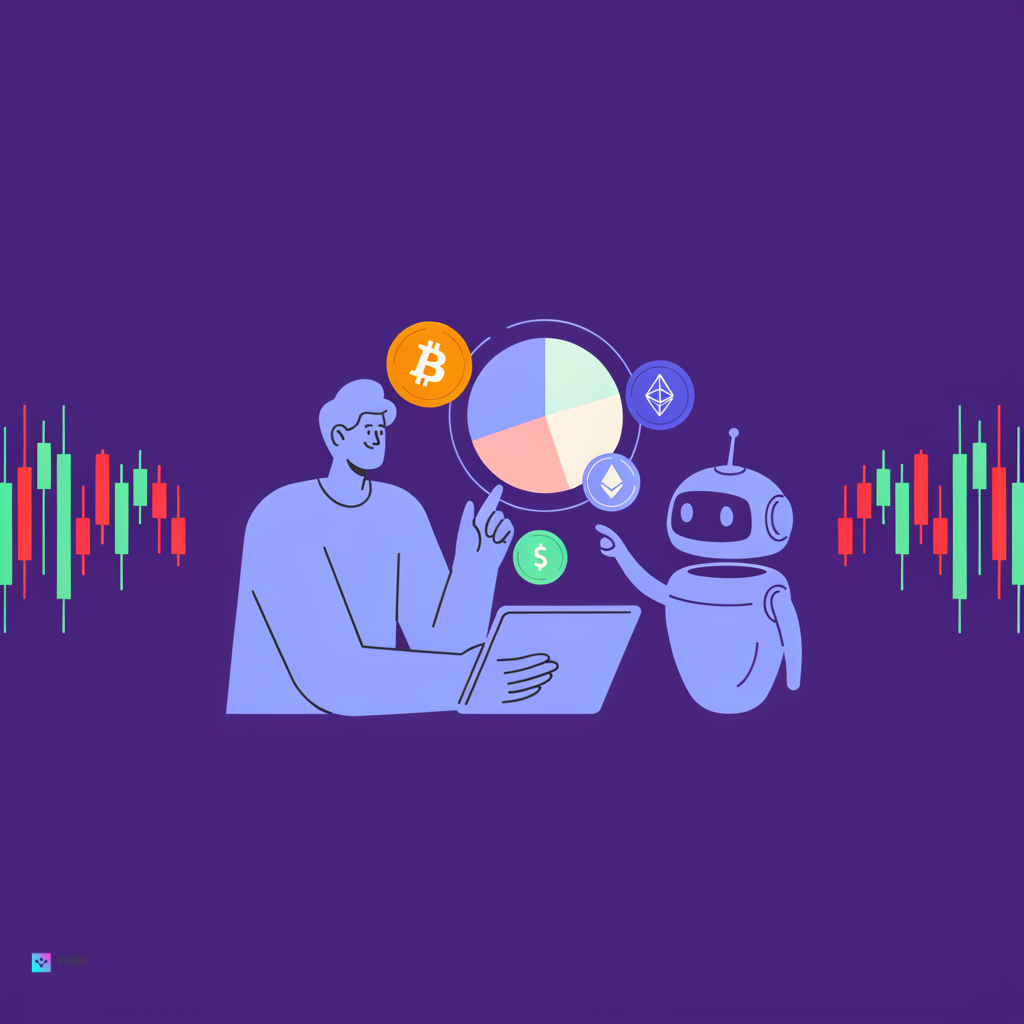
AI crypto portfolio management is moving beyond simple price predictions and trading signals.
Instead of asking AI which cryptocurrency will go up next, investors can use it to tackle a much harder problem:
How should an entire portfolio be constructed?
That means deciding how much Bitcoin to hold, how much Ethereum, how much to allocate to higher-risk altcoins, how much cash or stablecoins to keep, when to rebalance, and how much risk the portfolio is actually taking.
This is where AI gets interesting.
A human investor might look at ten or twenty assets and try to work out how they fit together.
An AI system can potentially process much larger datasets, compare different allocation combinations, monitor correlations, and continuously evaluate whether a portfolio still matches its objectives.
Researchers are actively exploring this.
A 2026 systematic review covering 50 peer-reviewed studies found growing use of machine learning and deep reinforcement learning for cryptocurrency portfolio optimization.
But there’s a big difference between AI being capable of building sophisticated portfolios and AI consistently building better portfolios in the real world.
So let’s break down what AI can actually do.
1. AI Can Look at the Portfolio, Not Just the Coin
One of the biggest mistakes investors make is analyzing assets individually.
Bitcoin looks bullish.
Ethereum looks interesting.
This AI token has strong momentum.
That DeFi token is gaining attention.
So you buy all of them.
Congratulations, you now own a portfolio.
But that doesn’t necessarily mean you have a well-designed portfolio.
The important question is how those assets behave together.
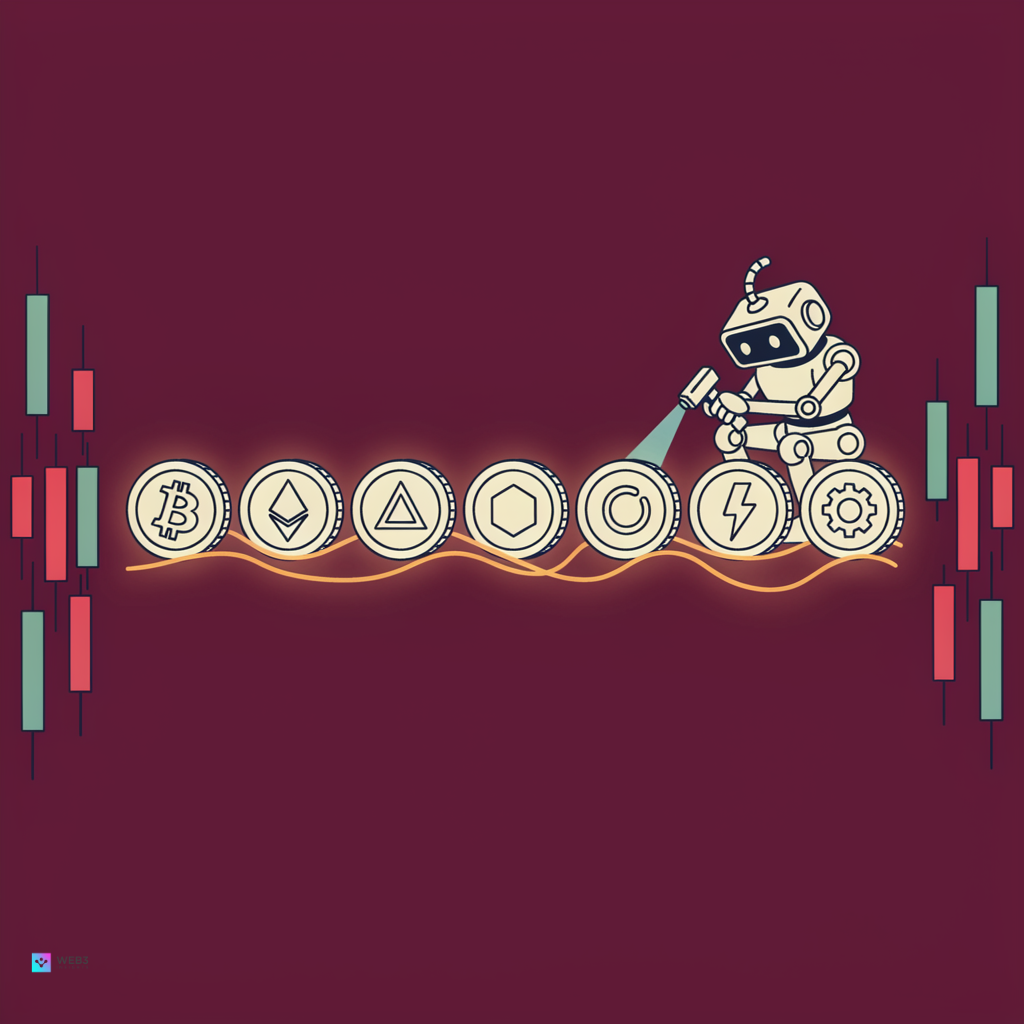
Imagine holding Bitcoin, Ethereum and five large-cap altcoins.
On paper, that’s seven different assets.
But during a major crypto sell-off, they could all fall at roughly the same time.
You’ve diversified the number of coins.
You haven’t necessarily diversified your risk.
This is one area where AI can be useful.
It can analyze relationships between assets, including:
- Correlation
- Volatility
- Historical drawdowns
- Momentum
- Liquidity
- Market capitalization
- Trading volume
- On-chain activity
- Macro variables
Research published in 2024 found that machine-learning-enhanced allocation methods could improve traditional approaches when incorporating cryptocurrency factor portfolios, while also showing that diversification benefits depend heavily on the portfolio construction method.
That’s the important part.
Diversification isn’t simply owning more things.
It’s owning assets that contribute different sources of risk and return.
AI can help make that relationship easier to analyze.
2. AI Can Build Different Portfolio Scenarios
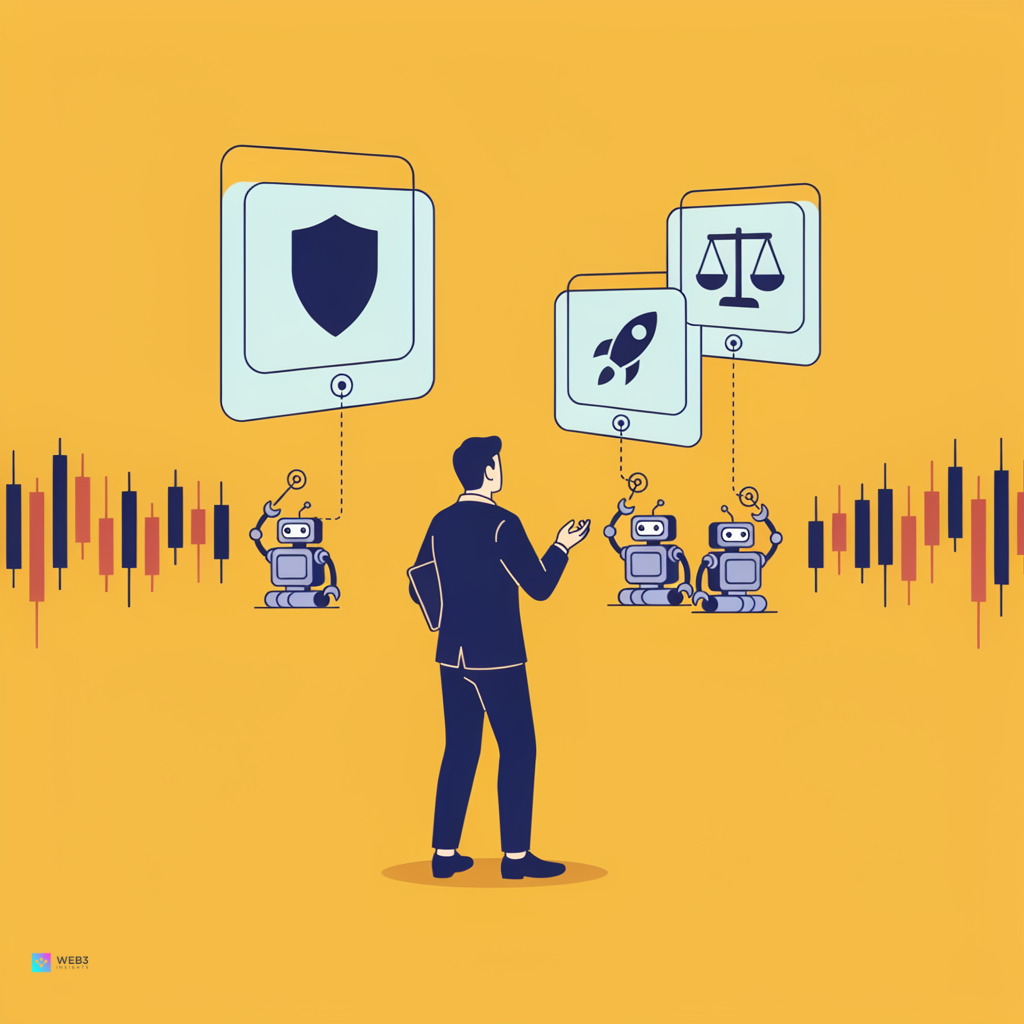
Here’s where portfolio construction gets more interesting.
Instead of asking AI:
“What crypto should I buy?”
you could give it an objective.
For example:
“Build three hypothetical crypto portfolios for a long-term investor: conservative, balanced, and aggressive. Use Bitcoin, Ethereum, major altcoins and stablecoins. Explain the purpose of each allocation, the main risks, expected volatility, and circumstances that could cause the portfolio to underperform.”
Now you’re no longer asking AI for a coin pick.
You’re asking it to solve an allocation problem.
And you can make the problem much more specific.
For example:
“I want a crypto portfolio focused on long-term growth but I don’t want any single altcoin to represent more than 5% of the portfolio.”
Or:
“Construct a portfolio where Bitcoin is the core position and higher-risk assets make up only a small satellite allocation.”
Or:
“Show me how the portfolio changes if my risk tolerance decreases.”
This is where AI can become a useful portfolio-design assistant.
It can generate multiple scenarios and explain the trade-offs between them.
Recent research is pushing this even further.
A 2026 study developed a deep Transformer Q-learning framework specifically for cryptocurrency portfolio optimization, comparing it with other machine-learning models and traditional portfolio approaches.
The important takeaway isn’t that one particular model has “solved” crypto investing.
It hasn’t.
The interesting part is that researchers are increasingly treating portfolio construction itself as a machine-learning problem.
3. AI Can Help With Rebalancing
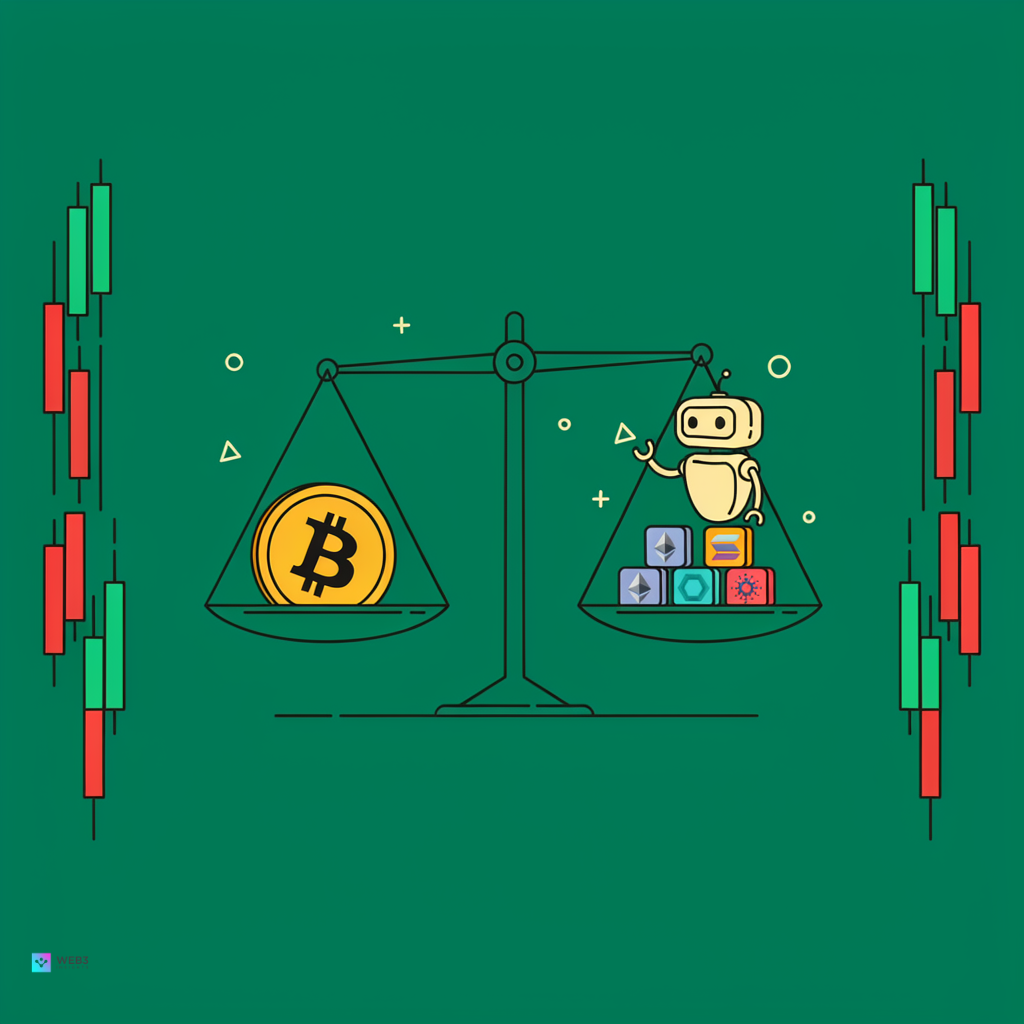
Here’s a problem every long-term investor eventually faces.
Your original allocation doesn’t stay original.
Imagine you start with:
50% Bitcoin
25% Ethereum
15% altcoins
10% stablecoins
Then Bitcoin has a huge run.
Six months later, Bitcoin might represent 65% of your portfolio.
You didn’t intentionally increase your Bitcoin allocation.
The market did it for you.
That’s called portfolio drift.
Rebalancing means bringing the portfolio back toward your intended allocation.
Traditionally, you might rebalance every month, quarter, or year.
AI can make the process more dynamic.
Instead of simply saying:
“It’s the first day of the month. Rebalance.”
an AI-driven system could evaluate the portfolio based on predefined rules and current conditions.
For example:
“Only rebalance when an asset moves more than 5 percentage points away from its target allocation.”
Or:
“Reduce the frequency of rebalancing when transaction costs become significant.”
Or:
“Evaluate whether the portfolio’s risk has changed materially before making an adjustment.”
This matters because constant trading isn’t automatically better.
Every rebalance can introduce:
- Trading fees
- Slippage
- Tax consequences
- Execution risk
- Unnecessary turnover
So the goal isn’t to make the portfolio move constantly.
The goal is to make deliberate adjustments when they are justified.
Research into dynamic crypto portfolio optimization is increasingly focused on exactly this problem. A 2026 agentic-AI study compared static and rolling-window portfolio optimization and found the dynamic approach produced stronger risk-adjusted results within its research setting.
That’s promising research.
But it’s still research, not proof that an AI portfolio manager will outperform after fees, taxes, slippage and changing market conditions.
4. AI Can Stress-Test Your Portfolio
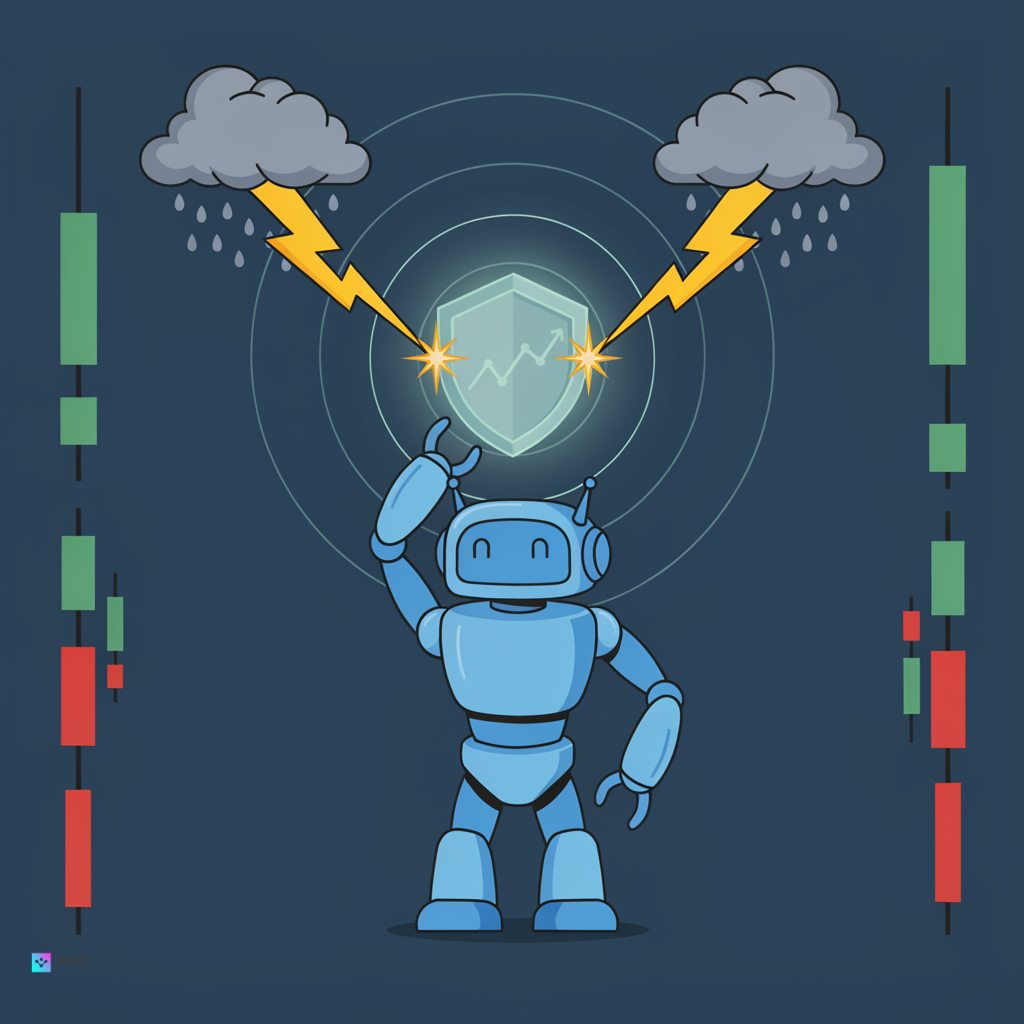
This might be one of the most useful applications of AI.
Most investors ask:
“How much can I make?”
A better portfolio question is:
“What happens if I’m wrong?”
Suppose your portfolio is heavily exposed to crypto.
You can ask AI to stress-test hypothetical scenarios.
For example:
“Stress-test this portfolio against a 30% Bitcoin drawdown, a major altcoin sell-off, a liquidity shock, and a prolonged crypto bear market. Estimate how each scenario could affect the portfolio and identify the positions contributing most to downside risk.”
Now you’re looking beyond expected returns.
You’re examining failure scenarios.
You can also ask AI to identify concentration risk.
Maybe your portfolio contains 15 different tokens, but 80% of them depend heavily on the same market narrative.
Or several positions are highly correlated.
Maybe your “diversified” portfolio is actually one giant bet on high-beta crypto.
AI can help uncover relationships that aren’t immediately obvious.
And this matters because crypto is particularly difficult to model.
Research published in 2026 describes cryptocurrencies as having high volatility, non-normal returns, downside risk and rapid regime changes, all of which make portfolio construction more difficult.
In other words:
The portfolio that works in one market environment may behave very differently in another.
That’s exactly why stress-testing matters.
5. The Real Question: Can AI Actually Build a Better Portfolio?
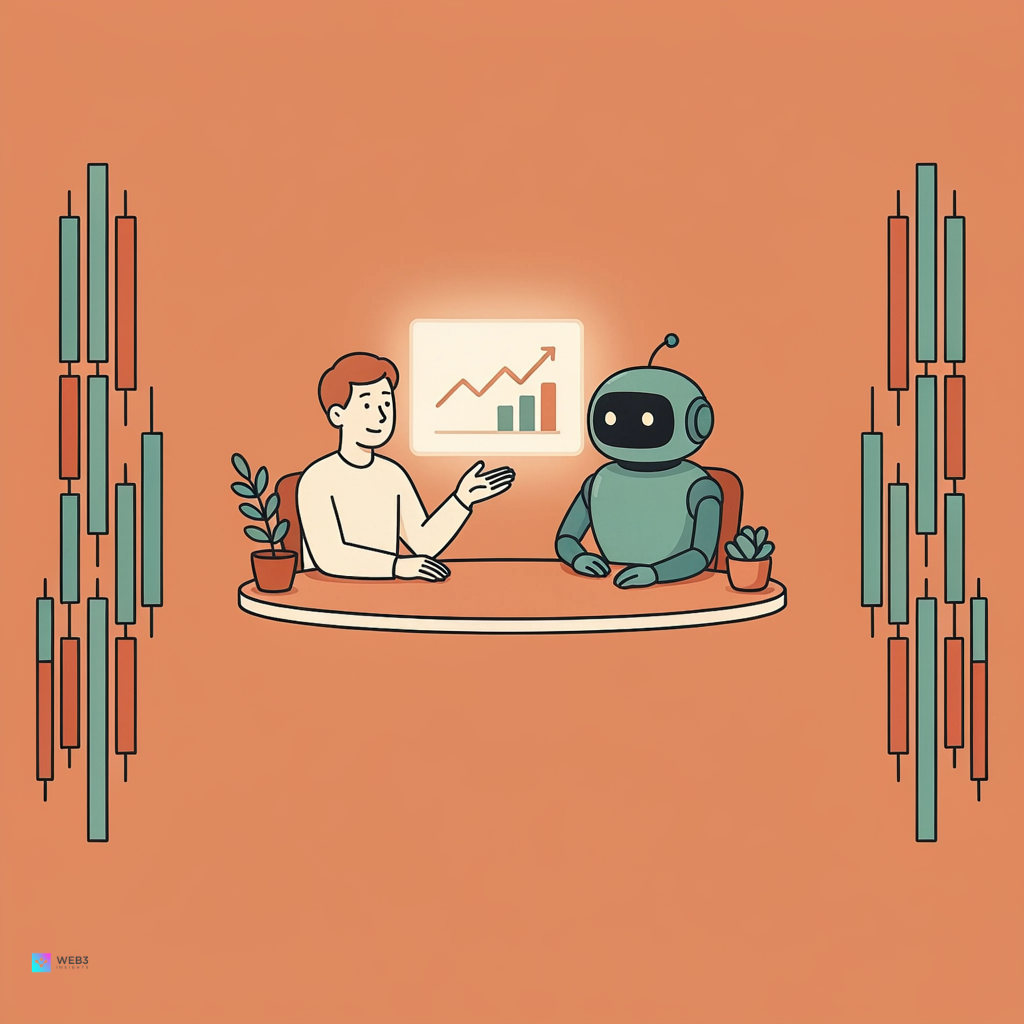
Now we get to the question in the headline.
Can AI build a better crypto portfolio?
Potentially.
But there isn’t a universal answer.
AI has some genuine advantages.
It can;
- process more information than a human can manually review.
- compare thousands of potential portfolio combinations.
- continuously monitor allocations.
- identify relationships between assets.
- run simulations and stress tests.
- apply the same rules consistently without getting emotionally attached to a position.
Those are real advantages.
But AI has weaknesses too.
Historical data can contain patterns that disappear.
Models can overfit.
Market regimes can change.
Transaction costs can eat into theoretical returns.
And a model that performs well in a backtest can behave very differently when real money meets a live market.
Even recent research showing strong results from AI-based portfolio models comes with the same basic limitation: the findings come from specific datasets, models, assumptions and testing periods.
One 2026 study, for example, found a Transformer-based reinforcement-learning model outperforming several alternatives and a benchmark on its selected cryptocurrency dataset using risk-adjusted metrics.
Another 2026 study on agentic AI reported stronger risk-adjusted performance from a dynamic optimization strategy than a static strategy within its experimental framework.
Interesting?
Absolutely.
Proof that AI will consistently outperform human investors?
No.
And that’s the distinction investors need to understand.
The most realistic future probably isn’t AI replacing portfolio managers.
It’s AI becoming another layer of the portfolio-management process.
A human might define the objectives.
AI might analyze the opportunity set.
The investor sets the risk boundaries.
AI monitors the portfolio.
The system identifies when something has changed.
The human decides how much authority to give the system.
That’s a much more realistic way to think about AI investing.
Trader’s Take
The exciting part about AI portfolio management isn’t that AI can supposedly predict the next winning cryptocurrency.
It’s that AI can help investors think about the portfolio as a system.
That’s a much harder problem.
Which assets belong together?
How much should each position represent?
Where is the hidden concentration?
How much downside can the portfolio withstand?
When should it rebalance?
And what happens if the market behaves completely differently from what you expected?
AI can help answer those questions faster and more systematically.
But there’s a catch.
A sophisticated portfolio model can still be wrong.
AI doesn’t remove uncertainty from investing.
It gives you more tools for dealing with it.
So rather than asking AI to build a portfolio and blindly following the result, use it to create scenarios, challenge your assumptions, stress-test your allocations and expose risks you may have overlooked.
The future of crypto investing probably isn’t about finding a machine that knows exactly what will happen next.
It’s about building better systems for making decisions when nobody knows what happens next.